KONBINI STUDIO / CASE NOTES
What makes an imagined place feel lived in?
A convenience store. Then an entire neighborhood.
01 / THE IDEA
A place you
almost remember.
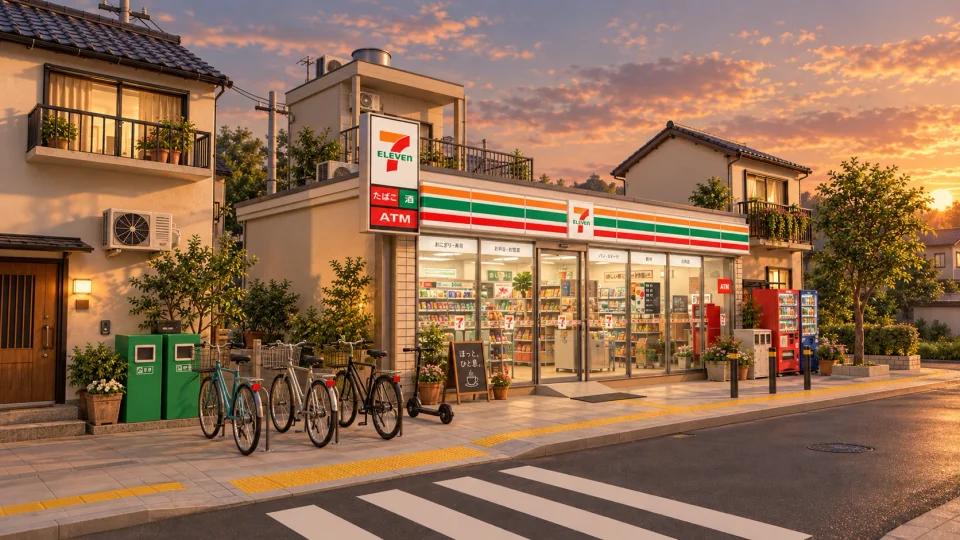
It began with a Japanese convenience store. Then the question got bigger: what would make it feel like somewhere people actually live? The crossing, the homes above the shop, a bicycle left outside and a quiet path behind the buildings became part of the same story.
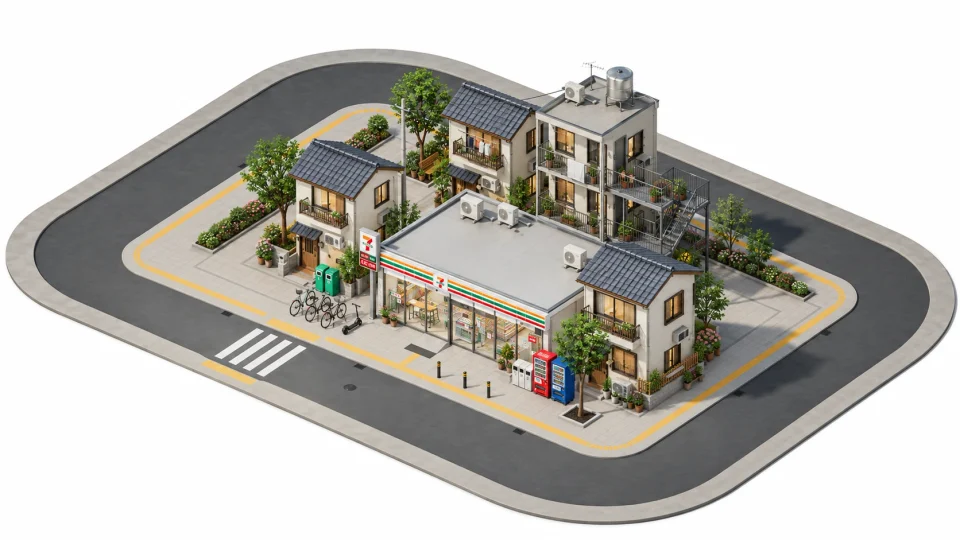
The direction is a small, coherent neighborhood with room to breathe. A bright shop sits beside tiled-roof houses and a taller apartment building; planted walks lead to benches and a shared garden. Human presence comes through everyday traces—laundry, a cup, a light in a window—without adding characters.
The goal is an editable environment built in Blender, eventually carried into Unreal. Generated reference studies help define the atmosphere and the details worth pursuing. Every convincing detail still has to become a believable part of the model.
The ambition / an inhabited neighborhood, from street to shelf
02 / THE EXPLORATION
From a feeling
to a place.
The most useful comparison is often a small one. The store already has a shape, the coffee corner has two seats, and the garden has a place to rest. The references explore what changes when light, materials and signs of use begin to work together.
These three pairs put an earlier Cycles checkpoint beside its generated direction study. They share a subject and a similar viewpoint, but the references can change proportions and invent details. The task is to translate the useful ideas into measured geometry, clear routes and convincing materials.
Compare the views / earlier Blender baseline → visual direction
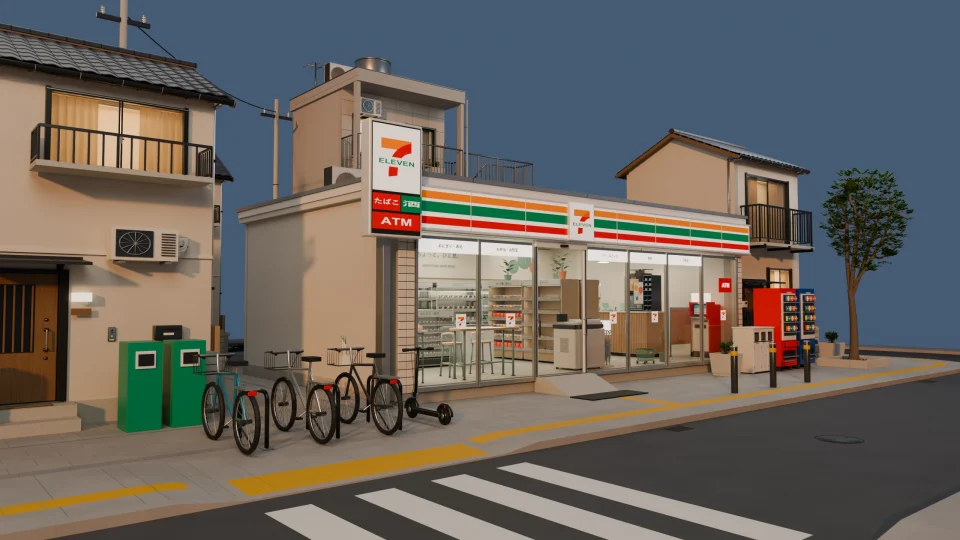
Earlier Blender checkpoint ↔ generated direction. Similar viewpoints; proportions and details can differ. Newer saved work follows below.
Behind the image
What changes the feeling
The building and crossing already establish the corner. Warmer light, planted thresholds and more varied surfaces make the reference feel welcoming.
What becomes real work
Refine glass, facade materials and practical lights; add grounded planting while preserving the actual crossing and entrance clearances.
03 / WHERE WE ARE NOW
Built in Blender.
Still becoming.
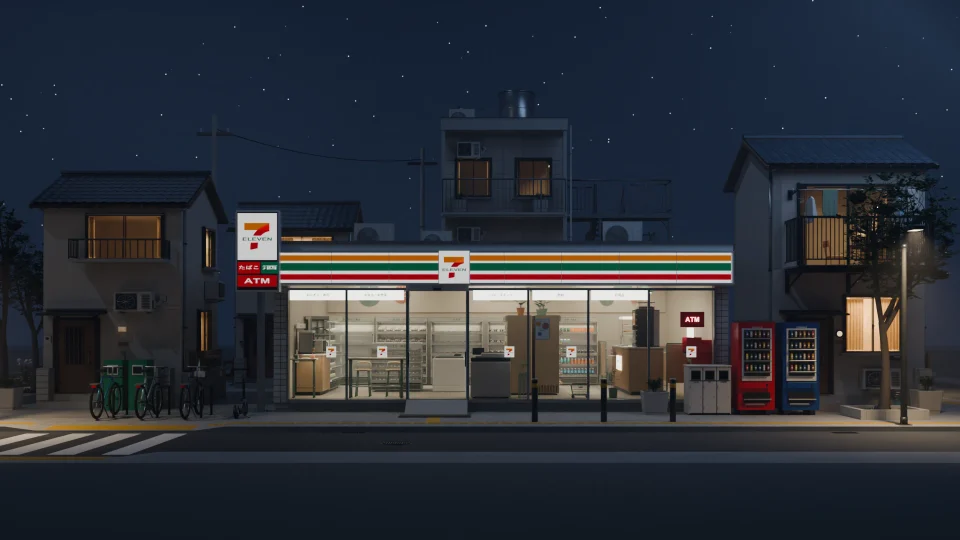
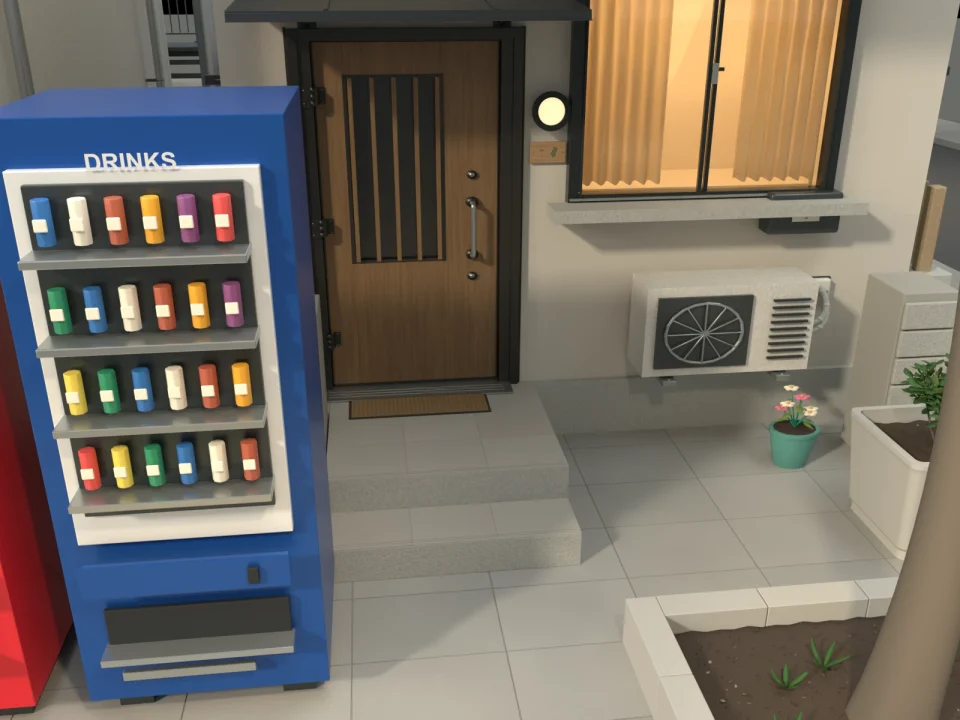
The saved environment has moved beyond the comparison baseline: furnished room corners, laundry, garden details and practical lighting now give the homes more life. A native night study explores glowing shop signs and streetlights; the later entrance work gives the right-hand house a wider approach and a deeper landing.
The images below are actual Blender renders from those saved stages. The night view predates the entrance revision, so they show different checkpoints rather than one finished version. Door movement and headroom still need correction, alongside material realism, stock variety and the final lighting pass.
Production is currently paused with the work preserved. When it resumes, the next step is to make the everyday spaces work as convincingly as they look. A complete Blender environment comes first; an Unreal version remains the next destination.
Saved progress / 10 September 2026 · production paused
- SAVED / WIP
A connected little world
Store, homes, garden, domestic details and lighting studies exist in the editable Blender scene.
- NEXT / ON RESUMING
Make everyday use believable
Resolve doors and access, then refine materials, stocked shelves, planting and cinematic views.
- AHEAD / NOT STARTED
From Blender to Unreal
Validate the finished environment and its assets before testing an actual Unreal project.
THE ANSWER, SO FAR
Build the everyday details that suggest a life.
The convenience store grew into a connected Blender environment with homes, garden spaces and lighting studies. The saved scene is work in progress; the comparison images guide the next pass on materials, access and believable signs of use.